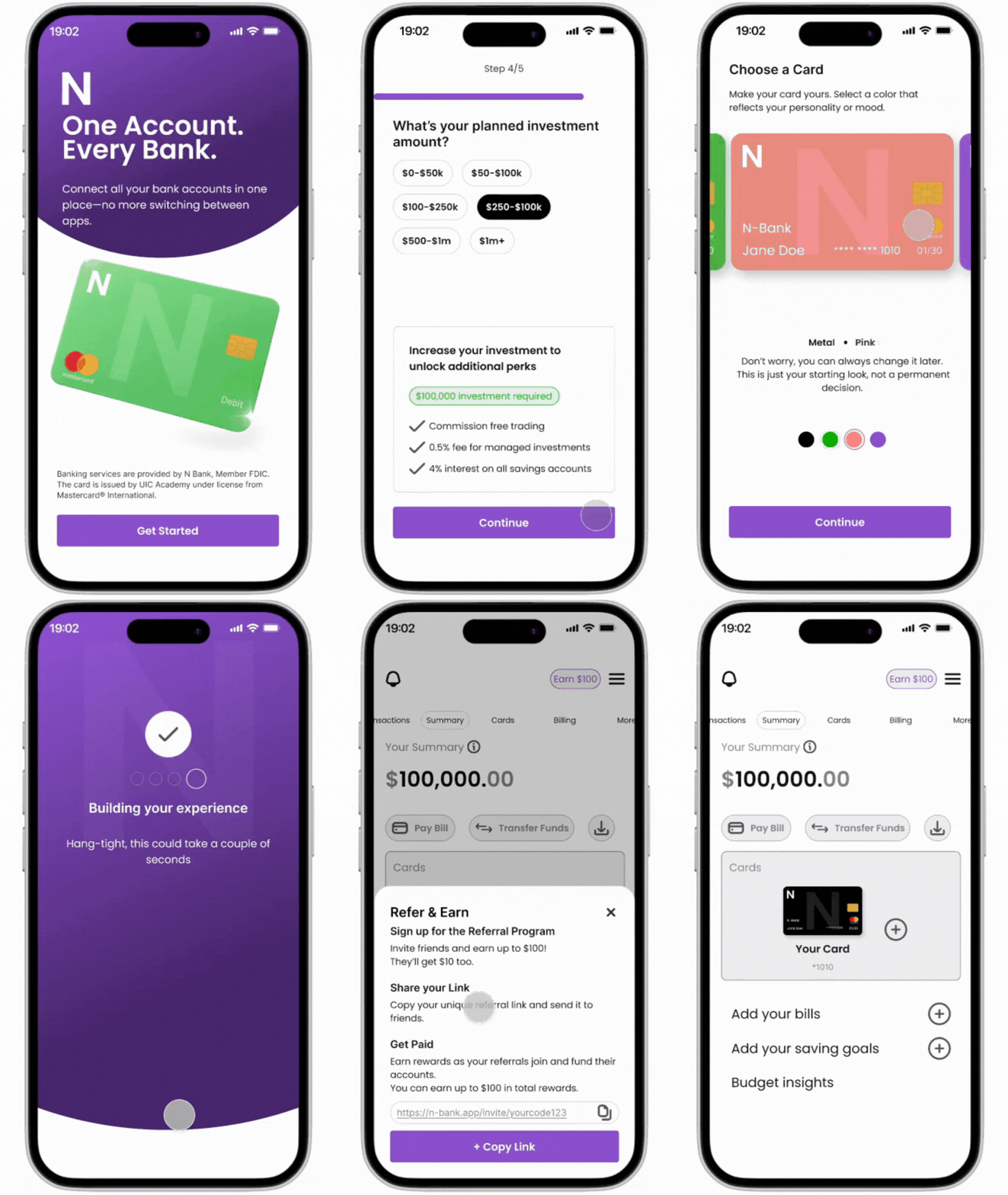
Onboarding screen: a single promise, a stylised card that suggests rather than represents, and regulatory disclosure above the CTA.
A concept onboarding flow for a banking aggregator app that lets people connect multiple bank accounts in one place, framed not as an advanced feature but as the obvious starting point.
Most banking apps assume one bank, one customer. In reality, people hold accounts across two to four institutions and switch between apps constantly: salary lands in one, the bond comes off another, the credit card sits with a third.
I wanted to design an onboarding flow for an aggregator app where "multiple banks in one place" is framed as the obvious starting point, not an advanced feature buried behind setup. The onboarding screen is where users decide whether the product is for them. If aggregation isn't the first promise, it becomes the last assumption.
Onboarding screen: a single promise, a stylised card that suggests rather than represents, and regulatory disclosure above the CTA.
The headline reads "One Account. Every Bank." Onboarding screens with more than one promise dilute the promise. The supporting sentence underneath does the explaining; the headline does the convincing.
A concept app showing a real bank's card creates trust friction the moment the user notices it isn't their bank. An abstracted card with the app's own letterform signals "your bank, represented here" without committing to one institution. The dimensional render gives it weight; the colour shift gives it warmth.
Fintech apps lose users at the moment trust is most needed. Burying the FDIC and license disclosure in a footer or terms-and-conditions modal treats the legal text as friction. Surfacing it above the Get Started button reframes it as evidence: this is a real bank, this is real money, here is the proof.
Banking apps default to navy, green, or neon orange. The category is over-coded. Choosing a purple gradient is a brand decision, not a decorative one — it makes the app distinguishable in a screenshot, which is the form in which fintech apps actually spread.
If aggregation isn't the first promise, it becomes the last assumption.
The current flow stops at the welcome screen. The harder design problem starts at step two: how does a user actually link a Standard Bank account to an FNB account inside one app, and what does the screen look like when the link fails halfway through?
Concept welcome screens are the easy part of fintech design. The interesting work is the error states, the retry flows, the "we couldn't verify your identity" moment when a user has already invested twelve minutes in setup. That's the version I'd build next, and it's the version I'd want a reviewer to look at.